About Us

History of Apostolic
Church Theological Seminary

Our History

Formal Establishment: ACTS was formally established in 2022, a fact that is recorded in the Seminary's official logo. Recent Accreditation: A significant milestone for the Seminary was achieved on January 30, 2025, when it received official recognition from the Ghana Tertiary Education Commission (GTEC) to operate as a private tertiary institution and offer its Bachelor of Theology and Ministry degree . Growth and Community Impact: The Seminary is actively growing.

0

Year Est

0 Yrs

Programme Duration

0

Semesters

Professional Educators

Get one-on-one help from our subject matter experts.

Real-Time Support

Get one-on-one help from our subject matter experts.

Free Access

Get one-on-one help from our subject matter experts.

Misson, Vision & Core Values

Our approach to theological education goes beyond academic instruction ...


Mission

Apostolic Church Theological Seminary exists to produce Spirit-led Pentecostal Ministers with a holistic cutting-edge ministry, serving with Ministry intelligence and integrity of heart.

Vision

To become a center of excellence for Pentecostal ministerial formation through authentic doctrine.

Core Values

Apostolic Church Theological Seminary has seven core values guiding the transfer, acquisition and impartation of knowledge and skill for ministerial formation. These values are as follows:

1)Evidence of Call: That every minister must have enough or sufficient evidence as proof of his calling into ministry. It is the belief of ACTS that every ministry must produce proof for all to see. (1 Timothy 4:15, John 14:12, Acts 1:8)

2)Prayerful: It is the belief of ACTS that prayer is the foundation for the recognition and development of ministry. The power of any thriving ministry is prayer. ACTS seeks to ensure that all students will leave the seminary as men of prayer; men who know what prayer is and are committed to an effective prayer life.

3)Having an Apostolic Zeal: Possessing the consciousness of a sent one and passion to fulfil the assignment ought to be the hallmark of every product of the Seminary. (Mark 16:20)

4)Innovation: With the changing faces of the cultures within which our churches are rooted and the advancement in technology amidst the limited nature of resources for ministry and its challenges, innovation is a must for every cutting-edge ministry in our times. ACTS seeks to prepare ministers who will be innovative enough to remain relevant with best practices any time. (1 Chronicles 12:32)

5)Sound in word: It is expected that every student would become a minister who is rich in the word of God, living in the word of God, and rightly dividing the word of truth. (Ezra 7:10, 2 Timothy 2:15)

6)Sound family life: Knowing that the family is the fundamental unit of every society and the church and that it is the primary mission field for every minister, ACTS seeks to inculcate sound family principles into every minister as examples to their parishioners. (Genesis 18:19, 2 Timothy 1:5)

7)Integrity: ACTS believes integrity is a non-negotiable ingredient for obedient Christian life and a successful ministry. The seminary seeks to make integrity an essential aspect of the student’s life and ministry. (Psalm 78:72)

Governance & Statutes​

Apostolic Church Theological Seminary (ACTS) operates within a clearly defined governance framework guided by its Statutes. These Statutes serve as the fundamental legal and administrative authority for the Seminary, providing direction for all aspects of governance, academic operations, and institutional management. The governance structure ensures that ACTS functions with accountability, transparency, and fidelity to the doctrinal foundations of The Apostolic Church Ghana.


The Statutes of ACTS

The Statutes of ACTS constitute the primary regulatory framework for the Seminary. They define the structure, roles, responsibilities, and procedures that guide the operation of the institution.

The Statutes provide authoritative guidance on:

  • The establishment and legal identity of the Seminary
  • The mission, vision, and core values of ACTS
  • Governance structures and institutional bodies
  • Academic organization and programme delivery
  • Administrative and financial management
  • Staff and student conduct and discipline
  • Appointment, promotion, and tenure of officers

These provisions ensure consistency, order, and institutional integrity in all operations of the Seminary.


Governance Structure

The governance of ACTS is organized into distinct but interrelated bodies, each with clearly defined responsibilities.

Governing Council

The Governing Council is the highest policy-making body of the Seminary. It provides strategic direction, oversees financial and administrative affairs, and ensures that the Seminary operates in accordance with its mission and statutory mandate.

Academic Board

The Academic Board is responsible for academic governance. It regulates teaching, learning, research, and assessment, and ensures that academic standards are maintained.

Standing and Advisory Committees

Various committees provide specialized expertise and enhance institutional effectiveness by supporting governance and decision-making within the Seminary. These include:

  • Academic Board
  • Academic Board Executive Committee
  • Governance Advisory Committee
  • Programme Advisory Committee
  • Appointments and Promotions Committee
  • Disciplinary Committee
  • Students Representative Council (SRC)

Leadership and Administrative Authority

The governance framework establishes a clear leadership hierarchy:
  • The Governing Council provides oversight and policy direction.
  • The Rector serves as the chief executive and academic head
  • The Management Team implements policies and manages daily operations.
  • The Extended Management Team takes advantage of educational experts within The Apostolic church to supplement the Management Team in implementing policies and procedures.
  • This structure ensures effective coordination between governance and administration.

Academic and Institutional Integrity

The Statutes provide mechanisms to ensure discipline, quality, and accountability within the Seminary. These include: Regulations governing examinations and academic standards Procedures for staff and student discipline Quality assurance systems and performance monitoring Transparent processes for appointments and promotions These provisions maintain the integrity and credibility of the Seminary’s academic and administrative systems.

Relationship with The Apostolic Church Ghana

While ACTS is independent, it trains ministers primarily for The Apostolic Church Ghana and is funded in part by The Apostolic Church Ghana. The governance structure reflects this relationship by ensuring that:
  • The Seminary is doctrinally aligned with The Apostolic Church Ghana.
  • The Governing Council has representatives from The Apostolic Church Ghana.
  • Governance decisions incorporate the mission and values of the Church.

Overview

The leadership of Apostolic Church Theological Seminary (ACTS) is structured to ensure effective governance, academic excellence, and administrative efficiency. In accordance with the Seminary’s statutes, leadership is exercised through a coordinated framework that distinguishes between governance oversight and operational management. This structure reflects a clear separation of responsibilities, where the Governing Council provides policy direction and oversight, while the Rector and Management Team ensure implementation and day-to-day administration.

Leadership


Governing and Executive Leadership

Chancellor
Apostle Dr. Aaron Nartey Ami-Narh
The Chancellor serves as the ceremonial and spiritual head of the Seminary, representing the highest level of apostolic authority from The Apostolic Church Ghana. The President of The Apostolic Church serves as Chancellor. The office provides spiritual oversight and ensures that the Seminary remains aligned with the doctrine, mission, and vision of the Church.


Governing Council

Chairman of Governing Council

Apostle Dr. Kwabena Dautey Akufo

The Governing Council is the highest policy-making and governing body of the Seminary. It is responsible for the governance, control, and management of the Seminary's academic, administrative, and financial affairs.

The Council is composed of representatives from the Church, academia, and relevant professional bodies, as provided in the statutes. Its membership includes the Rector and other appointed Governors who contribute to strategic decision-making and institutional oversight.

Key Functions of the Governing Council include:

  • Formulating policies for the governance of the Seminary
  • Providing financial oversight and ensuring accountability
  • Approving strategic plans, budgets, and major institutional decisions
  • Safeguarding the mission and long-term sustainability of the Seminary

A full list of Council members is available on the Governing Council page.


Rector

Rev. Prof. Jonathan Edward Tetteh Kuwornu-Adjaottor
The Rector is the chief executive and academic head of the Seminary. The office is responsible for the overall administration, coordination, and implementation of policies approved by the Governing Council. The Rector exercises general authority over staff, promotes scholarship, and ensures that the Seminary functions effectively in line with its mission and statutory mandate.

Vice Rector

Apostle Samuel Abeka
The Vice Rector supports the Rector in the administration and coordination of the Seminary. The office plays a key role in ensuring continuity in leadership, overseeing delegated responsibilities, and facilitating effective coordination across academic and administrative units.

Apostle Samuel Abeka, Vice Rector

Acting Registrar

Pastor Henry Nii Laryea
The Registrar is the chief administrative officer of the Seminary and is responsible for managing admissions, student records, academic documentation, and institutional communication. The office ensures administrative efficiency, coordination, and compliance with institutional policies.

Academic Dean

Dr. Samuel Zuul Bayeti
The Academic Dean provides leadership in academic affairs, including curriculum development, teaching quality, and research. The office ensures that academic programmes meet required standards and remain aligned with the Seminary’s mission and objectives.

Director of General Services

James Amadu Kinyakib (PMP)
The Director of General Services oversees the operational and support services of the Seminary, including facilities management, maintenance, security, and logistics. The office ensures that the physical and operational environment supports the Seminary’s academic and administrative activities.

Quality Assurance Officer

Dr. Richard Osei Akoto
The Quality Assurance Officer is responsible for maintaining and enhancing standards across the Seminary. The office develops quality benchmarks, monitors performance, and ensures compliance with institutional and regulatory requirements.

Librarian

Richfield Kwame Atinyo
The Librarian is responsible for the management of the Seminary’s library and learning resources. The office supports teaching, learning, and research by ensuring access to relevant information resources and services in line with academic needs.

Manager of Finance

Debrah Kwame Kyei
The Management of Finance is responsible for the financial management of the Seminary, including budgeting, accounting, financial reporting, and compliance. The office ensures prudent use of resources and supports the financial sustainability of the Seminary.

Leadership Framework

The leadership structure of ACTS reflects a coordinated system in which:

  • The Governing Council provides policy direction, governance, and oversight.
  • The Rector and Vice Rectorprovide executive leadership and institutional management.
  • The Management Teamensures implementation, operational efficiency, and service delivery.
  • The Extended Management Teamprovides additional expertise for the work of the Management Team.

This integrated framework ensures that the Seminary maintains high standards in governance, academic delivery, and institutional management, while remaining faithful to its spiritual mandate.

Governing Council

The Governing Council is the highest policy-making and governing body of the Seminary. It exercises authority over all academic, administrative, and financial affairs of ACTS in accordance with its statutes. The Council ensures that the Seminary operates in alignment with its mission, vision, and the doctrinal framework of The Apostolic Church Ghana. The Governing Council of Apostolic Church Theological Seminary (ACTS) comprises distinguished leaders drawn from the Church, academia, and professional sectors. The Council provides strategic direction, governance oversight, and policy leadership for the Seminary.

Council Members

  • Apostle Dr. Kwabena Dautey Akufo– Chairman of Governing Council
  • Professor J.E.T. Kuwornu-Adjaottor– Rector
  • Apostle Christopher Affum-Nyarko– Vice President, The Apostolic Church Ghana
  • Pastor Dr. Ebenezer Gyamera– Apostolic Professionals Network Representative
  • SM Sandex Aning– SRC Representative
  • Deaconess Victoria Ansah– Women’s Movement Representative
  • Robert Opata Mate-Wayo– All Nations University Representative
  • Pastor Martin Kofi Frempong– International Mission Fields Representative
  • Apostle Lawyer Johanes Vegba– Member
  • Her Honor Judge Rosemary Edith Hayford– Member
  • Elder Daniel Acquaye– Member
  • Elder Sampson Wiredu– Member
  • Elder Prof. David Teye Doku– Member

Functions and Responsibilities

The Governing Council is vested with authority to:

  • Provide overall governance and policy direction
  • Approve academic programmes upon recommendation of the Academic Board
  • Oversee financial management, budgeting, and resource allocation
  • Manage institutional property, investments, and assets
  • Ensure accountability, transparency, and compliance
  • Support the strategic development and sustainability of the Seminary

Meetings of the Council

  • The Council meets at least twice in each academic year
  • Special meetings may be convened when necessary
  • Decisions are made through formal deliberation and voting procedures

Governance Philosophy

The Governing Council operates on principles of:

  • Accountability
  • Transparency
  • Integrity
  • Strategic leadership
  • Stewardship

These principles guide the Council in ensuring that ACTS remains a center of excellence in theological education and ministerial formation.


Management Team

The Management Team operates under the leadership of the Rector and is responsible for the day-to-day administration and implementation of the Seminary’s policies and programmes. These officers ensure that the strategic directives of the Governing Council are effectively translated into operational outcomes.


Extended Management Team

The Extended Management Team brings in experts from outside the Seminary to assist the Management Team in the administration and implementation of the Seminary’s policies, programmes and strategic directives of the Governing Council.

Accreditation and Affiliation

Apostolic Church Theological Seminary (ACTS) is accredited by the Ghana Tertiary Education Commission, the statutory body responsible for the regulation and quality assurance of tertiary education in Ghana. This accreditation affirms that the Seminary meets the required national standards in:

  • Academic programme delivery
  • Institutional governance
  • Quality assurance systems
  • Faculty and administrative capacity

Accreditation by GTEC provides recognition and credibility to the Seminary's programmes and ensures that its academic offerings align with national and international benchmarks for higher education.

All Nations University

For GTEC accreditation purposes, ACTS is affiliated with All Nations University (ANU) to strengthen its academic delivery, institutional development, and programme credibility.

This affiliation is guided by a formal Memorandum of Understanding (MOU), which outlines the roles and responsibilities of both institutions. The agreement took effect on 1st June 2023 and provides a framework for:

  • Academic collaboration and programme development
  • Quality assurance and external moderation
  • Institutional support and capacity building
  • Enhancement of teaching and learning standards

Through this partnership, ACTS benefits from the academic expertise and institutional experience of ANU, while maintaining its distinct theological identity and mission.

Professional Associations

Apostolic Church Theological Seminary (ACTS) is committed to becoming a center of excellence in Pentecostal ministerial formation. In pursuit of this vision, the Seminary actively engages in strategic partnerships with established institutions.

  • West Africa Association of Theological Institutions (where applicable)– Regional collaboration in theological education
  • Ghana Library Association – Professional support for information services

Meaning of the Logo


The Apostolic Church–Ghana Symbol

The top left quadrant features the logo of The Apostolic Church–Ghana. This establishes the institutional identity of ACTS as a seminary under the authority and covering of the Church. It affirms that the Seminary does not operate independently but is rooted in the doctrine, mission, and spiritual heritage of The Apostolic Church–Ghana.


The Holy Spirit Flame and Dove

The top right quadrant contains a flame accompanied by a dove. The flame represents the presence and power of the Holy Spirit, while the dove signifies the descent of the Spirit, as seen at the baptism of Jesus. Together, these symbols emphasize the Seminary’s focus on spiritual formation, indicating that ministerial training at ACTS is not merely academic but deeply spiritual.


The Graduation Cap

The bottom left quadrant features a graduation cap. This symbolizes the academic dimension of the Seminary’s training. It highlights the importance of structured theological education, intellectual development, and disciplined study in preparing ministers for effective service.


The Open Bible

The bottom right quadrant contains an open Bible. This represents the central place of Scripture in the life and training of the Seminary. It reflects the conviction that the Bible is the inspired Word of God and the foundation for character formation, doctrinal understanding, and ministry practice. The Seminary, therefore, builds its teaching and worldview upon Scripture.


The Motto: “Integrity, Competence, Service”

Inscribed within the logo is the Seminary’s motto: Integrity, Competence, Service. This expresses the desired outcome of ACTS training. It is rooted in Psalm 78:72, which speaks of leadership marked by integrity of heart and skillfulness of hands. The motto captures the balance between character, capacity, and commitment to service.


The Year “2022”

The inscription of the year 2022 marks the formal establishment of ACTS. It signifies a new phase in the theological training mission of The Apostolic Church–Ghana, while also pointing to continuity with its historical foundations.


Integrated Meaning of the Logo

Taken together, the elements of the ACTS logo present a coherent vision of ministerial formation. The logo communicates that ACTS is:

  • Church-rooted (Apostolic identity)
  • Spirit-driven (Holy Spirit emphasis)
  • Academically grounded (graduation cap)
  • Scripturally anchored (open Bible)
  • Character-focused (integrity)
  • Skill-oriented (competence)
  • Service-driven (mission)

The logo, therefore, is not merely symbolic but serves as a theological and institutional statement of what ACTS stands for and seeks to produce.

Motto of ACTS

The motto of Apostolic Church Theological Seminary (ACTS), “Integrity, Competence, Service,” captures the essence of the Seminary’s philosophy of ministerial formation. It reflects the balance between character, capacity, and commitment that defines the training of student ministers.
  • The motto is inspired by Psalm 78:72, which speaks of leadership that combines character and skill: “And David shepherded them with integrity of heart; with skillful hands he led them.”
  • This scripture underscores the Seminary’s commitment to developing leaders who are both spiritually grounded and practically equipped.

Meaning of the Motto


Integrity

Integrity emphasizes the formation of character. The Seminary is committed to raising ministers who demonstrate honesty, moral uprightness, and faithfulness in both private and public life. This reflects the biblical standard of leadership rooted in purity of heart and consistency in conduct.


Competence

Competence represents the intellectual and practical capacity required for effective ministry. ACTS equips students with sound theological knowledge, critical thinking skills, and practical ministry training to ensure that they are well-prepared for the demands of leadership and service.


Service

Service highlights the ultimate purpose of ministerial training. The Seminary prepares individuals not for status, but for service to God, the Church, and society. This reflects a commitment to humility, sacrifice, and dedication in fulfilling one’s calling.

Conclusion:
The motto “Integrity, Competence, Service” is not merely a statement but a standard for life and ministry. It expresses the Seminary’s commitment to raising Spirit-led ministers who embody sound character, demonstrate professional competence, and serve faithfully in their calling.

Campus & Facilities

Overview
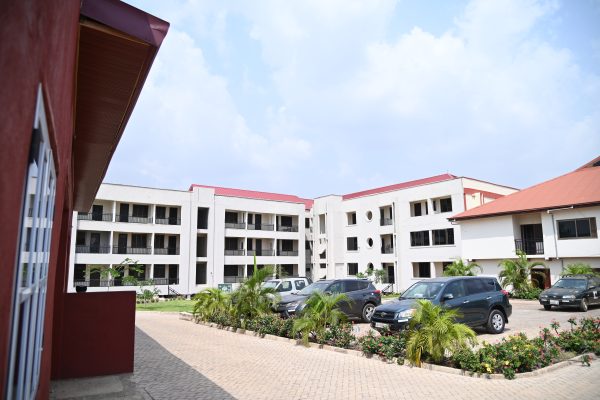
Apostolic Church Theological Seminary (ACTS) is situated in a serene and conducive environment at Fankyenebra in Kumasi. The campus is designed to support academic work, spiritual formation, and community life, providing an atmosphere that promotes focused study, reflection, and ministerial development. The Seminary continues to develop its infrastructure to meet the growing demands of theological education and training.

Lecture Facilities

The Seminary provides lecture rooms designed to support effective teaching and learning.

  • Well-arranged classrooms for academic instruction
  • Adequate seating for students and faculty
  • Learning environments that encourage interaction and engagement

These facilities support both theoretical instruction and practical ministry training.

Library

The ACTS Library serves as the academic and research hub of the Seminary.

  • Access to theological and academic resources
  • Reading spaces for individual and group study
  • ICT facilities for research and digital access
  • Integration with digital systems such as Koha and the Institutional Repository

The Library supports teaching, research, and academic writing within the Seminary.


ICT Facilities

The Seminary provides basic information and communication technology infrastructure to support learning and research.

  • Computer workstations for academic use
  • Internet access for research and study
  • Digital platforms to support teaching and learning

Accommodation

Accommodation facilities are available to support student life and ministerial formation.

  • Residential facilities for student ministers
  • Structured living environment that promotes discipline and community life
  • Opportunities for spiritual growth and peer interaction

Worship and Spiritual Formation Spaces

As a theological seminary, ACTS places strong emphasis on spiritual life, providing spaces for the Seminary’s mission of raising Spirit-led ministers .

  • Chapel and worship spaces for prayer and services
  • Regular devotional and spiritual formation activities
  • Environment that fosters personal and corporate worship

Strategic Plan

Apostolic Church Theological Seminary (ACTS) operates under a Corporate Strategic Plan (2023–2033) that guides its growth, development, and long-term direction. The plan outlines the Seminary’s commitment to academic excellence, spiritual formation, and institutional sustainability as it develops into a fully established center for Pentecostal ministerial training.


Strategic Focus Areas

The Seminary’s development is guided by five key priorities:


Academic Excellence and Accreditation

ACTS is committed to maintaining high academic standards and complying with the requirements of the Ghana Tertiary Education Commission.


Infrastructure Development

The Seminary continues to improve its facilities, learning environment, and technological systems to support effective teaching and learning.


Human Resource Development

ACTS seeks to attract, develop, and retain qualified faculty and staff to deliver quality theological education.


Spiritual Formation and Innovation

The Seminary emphasizes holistic ministerial training through spiritual disciplines, practical ministry, and innovative teaching approaches.


Financial Sustainability

ACTS is committed to prudent financial management, fundraising, and resource mobilization to support its long-term growth.


Implementation

The Strategic Plan is implemented through structured programmes, institutional planning, and continuous monitoring to ensure that the Seminary achieves its objectives.

Our approach to theological education goes beyond academic instruction to include spiritual formation, character development, and practical ministry training.